
Knowing what causes car accidents in Philadelphia may help you avoid being involved in one. Philadelphia has taken great strides in trying to prevent and eliminate traffic deaths, creating Vision Zero 2030, which seeks to get the number of fatal crashes to zero by the year 2030. According to research involved in this plan, 12% of Philadelphia’s city streets account for approximately 80% of all severe and fatal traffic crashes.
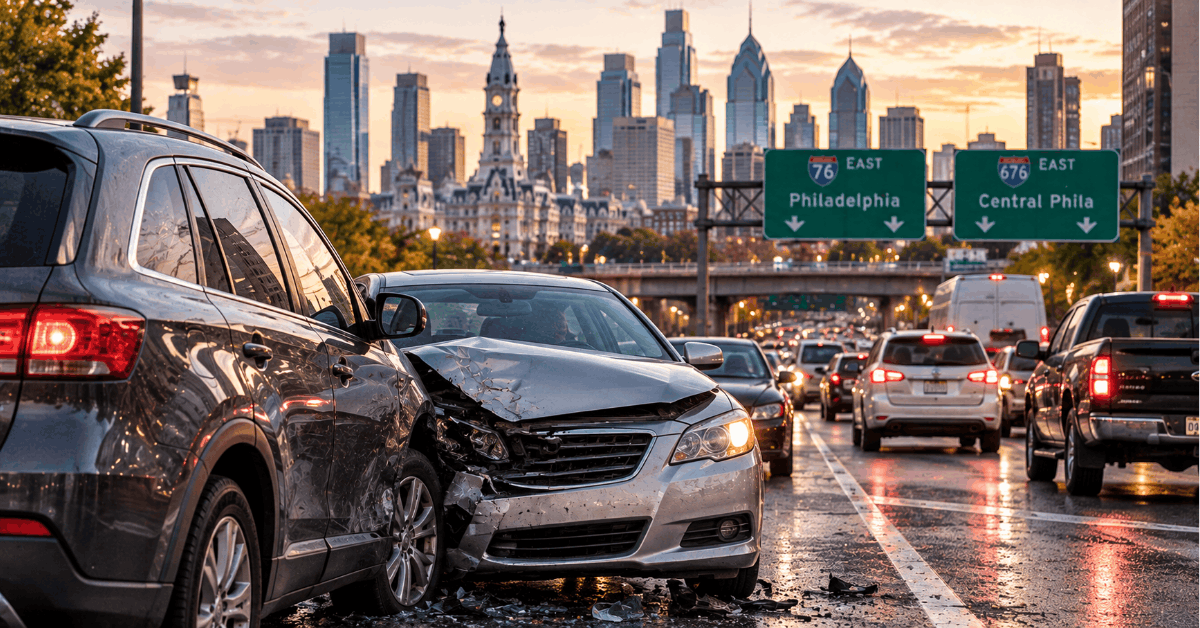
Here are the busiest roads in Philadelphia, Pennsylvania and the most common causes of motor vehicle accidents on them:
Roosevelt Boulevard
The first set of roadways that we will discuss is part of the High Injury Network, which includes the roadways where most fatal and serious crashes occur, excluding interstates. Roosevelt Boulevard is one of the primary corridors that make up this network. It is one of the widest and fastest roadways in the city.
Because this roadway has multiple lanes of motorists traveling at high rates of speed, pileup crashes are common. One small mistake, like failing to check blind spots or signal before switching lanes, can end up in one of these dangerous pileups.
Broad Street
Broad Street consistently records the highest number of fatal and serious injury crashes of any single corridor in the city. This is due to several characteristics, including the following:
- Speeding: When drivers speed, they can lose control of their vehicle, will require more time to reach a complete stop once they recognize the need to make one, and cause more significant damage. According to the National Highway Traffic Safety Administration (NHTSA), speeding was a contributing factor in 29% of all traffic fatalities in 2024.
- Heavy traffic: Heavy urban traffic congestion contributes to many accidents. When motorists do not give others adequate space, get impatient due to traffic, or are distracted, they can cause collisions with others.
- Unsafe turns: Broad Street includes complex multi-lane intersections, such as those at Olney or Erie. Drivers who fail to yield the right of way or misjudge gaps in traffic can cause T-bone and angle crashes.
- Reckless driving: Motorists may tailgate, make sudden lane changes, run red lights, or commit other dangerous driving maneuvers that contribute to serious and fatal collisions on Broad Street.
- Other traffic types: Various types of traffic converge on Broad Street, including commercial trucks, bicyclists, and foot traffic from pedestrians. Additionally, buses make frequent stops. This mixture of commuters can lead to accidents on this major multi-lane central arterial road.
Frankford Avenue
Frankford Avenue is a long arterial corridor, also plagued with dense traffic from vehicles and pedestrians. When a vehicle hits a vulnerable pedestrian, the latter often suffers serious injuries. Car accident lawyers can help injured pedestrians.
Chestnut Street
Chestnut Street intersects with many key commercial and commuter stretches, including parts of Market East, Center City, and West Philadelphia. In areas with high motorist and pedestrian traffic, distracted driving is a crucial concern because a few seconds of inattention can result in hundreds of feet traveled.
According to the NHTSA, distracted driving includes anything that takes the driver’s focus on the key task of driving. The federal agency reports that 3,208 people were killed in 2024 due to distracted driving. Leading forms of distracted driving in Philadelphia include the following:
- Eating and drinking
- Talking on a cell phone
- Texting while driving
- Talking to passengers
- Grooming
- Adjusting temperature or controls
- Interacting with screened consoles in the vehicle
Allegheny Avenue
Philadelphia’s Vision Zero targets Allegheny Avenue in its city safety and capital plans for high killed or seriously injured (KSI) crash counts. Some of the major contributing factors to crashes here are:
- Excessive speed: Driving beyond the posted speed limit or too fast for weather or road conditions can cause serious crashes. Recent reported crashes included a speeding driver hitting a 62-year-old motorist and a high-speed vehicle hitting the SEPTA Market-Frankford Line Allegheny Station.
- Running red lights: Red lights are essential to regulating traffic, but when drivers disregard them, they can cause serious injuries. A particularly problematic area for red-light running is F Street and Allegheny Avenue.
- Illegal U-turns: Illegal U-turns, such as at 17th Street, can confuse other motorists and lead to preventable crashes.
- Other traffic violations: Drivers might make sudden evasive actions in response to erratic maneuvers by other drivers, weaving in and out of lanes by drunk drivers, or other reckless driving behaviors.
- Fleeing drivers: Drivers who are fleeing from police after a hit-and-run crash or involved in a high-speed crash can cause collisions, such as those occurring near 5th and West Allegheny Avenue.
- Vulnerable road user conflicts: Much of Allegheny Avenue can be described as a tight urban corridor. This characteristic can make it difficult for pedestrians, bicyclists, and other types of road users to navigate.
Cecil B. Moore Avenue
This road, located between 10th Street and Willington Street, has also been identified as a high-priority safety corridor. A disproportionate share of severe and fatal traffic incidents occur on this roadway due to factors such as:
- Loss of control: Speeding drivers or those unfamiliar with the difficult weather conditions are more likely to lose control. This has historically led to fatal crashes on 2nd Street and 21st Street along this corridor.
- Pedestrian and university density: Because this corridor borders Temple University, there is increased traffic, both pedestrian and vehicle, along it. This factor contributes to the corridor being ranked among the most dangerous areas for pedestrian accidents.
- Hits-and-runs: Vehicles that are involved in high-speed police chases have been known to cause hit-and-run crashes along 20th and Cecil B. Moore Avenue.
Belmont Avenue
Belmont Avenue is plagued with some of the same issues that lead to crashes on other busy Philadelphia roads, such as speeding, reckless driving, driver distraction, and high traffic volumes. The proximity to the Schuylkill Expressway (I-76) creates additional safety concerns as motorists rush to merge onto the expressway. Furthermore, backups can cause crashes when motorists reach unexpected stops in traffic.
Another issue in this area is the severe weather, which can create visibility issues, reduce traction, and cause trees to fall into the pathway of motorists.
Luzerne Street
Luzerne Street likely earns its spot on the High Injury Network due to being a frequent site of serious and fatal pedestrian and bicyclist collisions near Fairmount Park.
84th Street
Concentrated crash histories on 84th Street, which runs from Lindbergh Boulevard to Bartram Avenue, make this a designated High Injury Network corridor.
Other High Injury Network Roads
In addition to the above, the following are designated arterials in the high-injury network:
- Germantown Avenue
- Erie Avenue
- 52nd Street
- Chester Avenue
- Old York Road
Interstate 76
More than 215,000 people traverse Interstate 76, or the Schuylkill Expressway, every day. With more vehicles on the road, the greater the likelihood of collisions occurring. This roadway can be difficult to travel, including:
- Narrow lanes
- Tight left-side merges
- Frequent congestion
These conditions are difficult for motorists familiar with the road, though they still pose hazards. However, they are even more dangerous for tourists who are unfamiliar with them.
Interstate 95
Interstate 95 ranks as one of the highest-volume interstate corridors in Pennsylvania. It serves as the main north-south coastal artery through Philadelphia, averaging 275,000 average daily traffic. Heavy traffic can cause collisions when motorists:
- Fail to check their blind spots
- Fail to signal
- Do not merge properly
- Make unsafe passes
- Follow too closely
- Fail to adjust their speeds due to dangerous weather conditions or heavy traffic
U.S. Route 1
U.S. Route 1 or Roosevelt Boulevard is a large, multi-lane Philadelphia thoroughfare located in the Northeast part of the city. It is known for heavy commuter traffic and high speeds. It is also the corridor that has resulted in the most fatal and serious injury crashes in the last five years, compared to any other corridor in the city.
These characteristics led the city to recently 23 speed cameras along its route. The Vision Zero 2030 cited research from the University of Pennsylvania that one life is saved every month due to the installation of these cameras.
PA 611
PA 611 or Broad Street is considered one of the busiest urban and center city streets. It is the primary north-south street, comprising up to fifteen miles. The area is known for causing frequent delays due to hosting major parades and massive volumes of traffic. This area has also been targeted with speed enforcement cameras due to these characteristics.
Market Street
Market Street is one of the city’s busiest roads because it carries heavy commercial and transit traffic every day. High crash rankings are present at intersections with 8th Street and 12th Street.
Most severe crashes on this corridor involve pedestrians or vehicles struck at an angle. For example, a distracted driver turning right onto 52nd Street on May 16, 2025, hit a pedestrian crossing the intersection with Market Street, killing them. From January 1 to August 1, 2026, 23 pedestrians had been killed in crashes in the city.
Chestnut Street
High-activity retail and restaurant corridors in Center City combine with heavy local pedestrian traffic, making this a particularly dangerous section of the city.
City Avenue
Heavy cross-traffic between Lower Merion, the Main Line, and West and North Philadelphia contributes to this road being one of the busiest ones in the city, along with being a frequent hotspot for motor vehicle accidents.
Kelly Drive
Because Kelly Drive is a riverfront route along the Schuylkill River, it is scenic, but its beauty can easily distract drivers. Additionally, its tight curves near Fairmount Avenue can also contribute to vehicle rollovers and collisions.
How to Avoid Car Accidents on These Roads
Traveling through Philadelphia is not a simple undertaking. Accidents occur every day. However, the following actions may be able to help you prevent being involved in an accident on one of Philadelphia’s busy roads:
- Give plenty of space: Observe the three-second rule when possible. Spot a stationary object ahead. When the rear bumper of the vehicle in front of you reaches that landmark, start counting. If you don’t get to three by the time you reach that same object, you are too close and should provide more space.
- Watch your speed: Speeding is a contributing factor in many motor vehicle accidents on Pennsylvania roads. Stay within the speed limit, and further reduce your speed to account for poor road or weather conditions.
- Avoid distractions: Driving safely requires complete attention to this task. Eliminate distractions by not interacting with your phone during your commute, setting up GPS requests before the vehicle is in motion, and keeping your mind focused on driving.
- Be careful at intersections: Intersections are a common spot for car crashes in Philadelphia. Wait a moment after a light turns green before proceeding in case anyone runs a red light. Look in all directions before crossing the intersection.
- Monitor your surroundings: Look well ahead of you to monitor the actions of other drivers. This can help you anticipate hazards or sudden stops. Leave yourself enough space, even when other drivers don’t properly signal or merge.
Contact Our Car Accident Lawyers for a Free Consultation Today
Unfortunately, no matter how safely you drive, you can’t control the actions of other motorists. If you were hurt due to someone else’s negligence, you have the right to seek compensation for the damages that you have suffered, which can help pay for medical bills, make up lost wages, and provide some recompense for the physical pain and suffering that you have endured. Cousin Benny Injury Lawyers can help.
We have over 25 years of collective experience and have recovered millions of dollars in compensation for personal injury victims. Contact us today for a free case evaluation to discuss your legal rights and options.