
Getting in an accident can be a scary experience, and one that is made even more stressful as you wonder how you will pay for medical bills and make up for lost income that is causing you financial strain. You have insurance to help cover these unexpected occurrences, but what happens if your medical bills are higher than your insurance coverage?
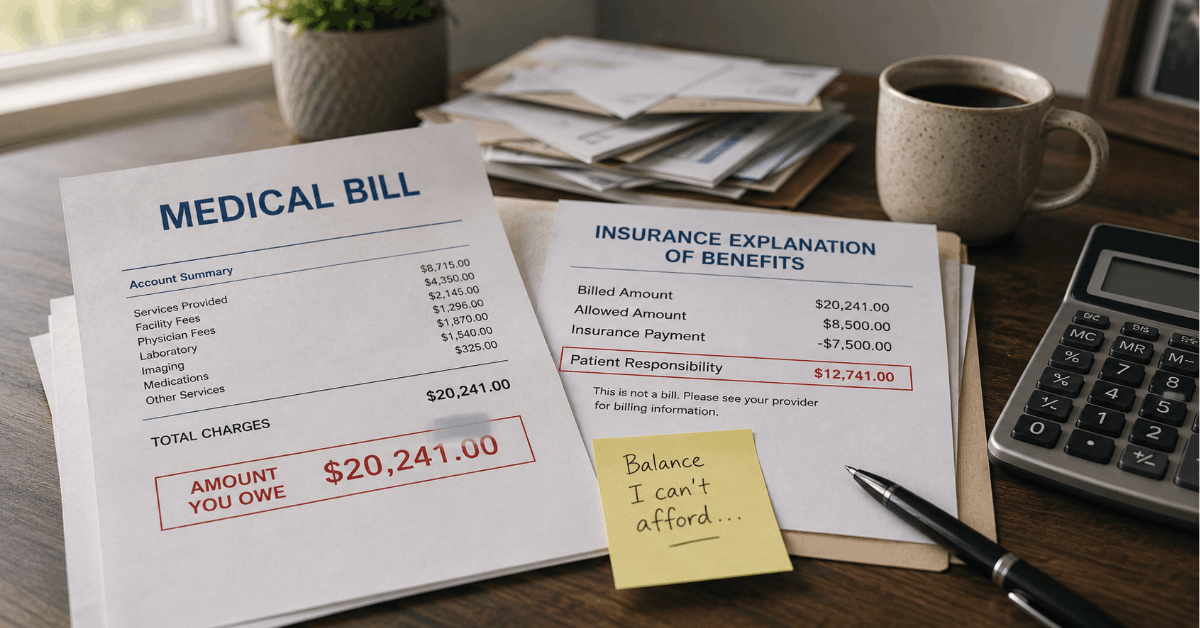
You may have various options for covering your medical bills after an accident that wasn’t your fault. An experienced attorney from Cousin Benny Personal Injury can help you evaluate them and advise you on the best course of action. Contact us today for a free, no-obligation consultation.
Pennsylvania Car Insurance Limits
Car accidents can result in substantial medical expenses that quickly exceed the insurance coverage available to an injured person. Pennsylvania requires drivers to carry minimum liability insurance coverage, but these limits may be insufficient to cover serious injuries and other accident-related losses.
Pennsylvania’s minimum auto liability insurance requirements are:
- $15,000 for injury or death to one person in an accident
- $30,000 for injury or death to more than one person in an accident
- $5,000 for property damage
This insurance covers the damages that the driver’s negligence causes to someone else. If the at-fault party only has this minimal insurance, the resulting medical bills may quickly exceed these limits.
Pennsylvania also generally requires applicable automobile insurance policies to include at least $5,000 in first-party medical benefits. These benefits help pay eligible medical expenses following an accident, regardless of fault.
Drivers can purchase additional first-party benefits, including:
- Higher medical benefit limits
- Income loss benefits
- Funeral expense benefits
- Accidental death benefits
- Extraordinary medical benefits for qualifying expenses
Under 75 Pa.C.S. § 1715, insurers must make medical benefits available for purchase up to at least $100,000, along with additional extraordinary medical benefits subject to statutory limits.
However, these higher benefit amounts are not automatically included in every policy. The coverage available depends on the benefits purchased, the applicable insurance policy, and Pennsylvania law.
Under Pennsylvania law, first-party medical benefits are generally obtained from applicable automobile insurance policies in the following order of priority:
- Your own policy: If you are a named insured on an automobile insurance policy.
- A policy covering you: If you are insured under another applicable automobile insurance policy.
- The vehicle’s policy: If you were an occupant of an insured vehicle and coverage is not available under the preceding categories.
- A vehicle involved in the accident: If you were not an occupant of a motor vehicle, such as a pedestrian, an applicable policy covering a vehicle involved in the accident may provide benefits.
The applicable policy depends on the circumstances of the accident and Pennsylvania’s insurance eligibility rules.
An experienced personal injury attorney can review the policies that apply to your case and explain the coverage that might be available.
What Happens When Your Medical Bills Exceed Your Insurance Limits?
If your medical expenses exceed your available insurance coverage, you may still have options for paying outstanding bills or pursuing additional compensation.
For example, suppose you have $5,000 in first-party medical benefits, but your accident-related medical expenses total $30,000.
Once the available first-party medical benefits are exhausted, the remaining expenses do not automatically become the responsibility of the at-fault driver’s insurance company.
Depending on your circumstances, additional payment or recovery options may include:
- Health insurance: Your health insurance may cover eligible medical expenses that exceed your available automobile medical benefits.
- Additional automobile coverage: Higher first-party medical benefit limits or other applicable coverage may provide additional benefits.
- Third-party liability claims: If another driver’s negligence caused the accident, you may be able to pursue compensation for legally recoverable medical expenses and other damages.
- Uninsured or underinsured motorist coverage: If purchased and applicable, these coverages may provide additional compensation when the responsible driver has no insurance or insufficient liability coverage.
- Other responsible parties: An attorney may investigate whether another driver, employer, or other legally responsible party contributed to the accident.
It is important to distinguish between exhausting your own medical benefits and exceeding the at-fault driver’s bodily injury liability limits.
The first situation concerns which insurance coverage can pay your treatment expenses. The second concerns the amount of liability insurance available to compensate you for damages.
An experienced Pennsylvania personal injury attorney can review both issues and identify potential sources of recovery.
Medical Bills You Might Incur After an Accident
To understand why your medical bills might exceed your insurance coverage, let’s look at some of the common medical expenses that accident victims in Philadelphia County often incur:
- Emergency treatment and transportation: You could have bills from your initial emergency room visit, as well as ambulance charges. Many accident victims exhaust their medical benefits due to ER visits alone.
- Hospitalization: More serious injuries, such as those resulting from speeding accidents or truck accidents, may lead to long hospital stays.
- Surgical costs: If the accident caused a broken bone, internal organ damage, or other serious injury, surgery may be necessary to restore function or prevent more severe injuries.
- Home healthcare: If the accident caused an injury that requires ongoing care, home healthcare assistance may be necessary.
- Diagnostic tests: Doctors may use various diagnostic tests to properly diagnose patients, such as MRIs, X-rays, CT scans, blood tests, and urine tests. Accident victims may receive separate bills for these expenses.
- Follow-up treatment: The accident victim may require treatment from their primary care physician, specialist visits, or other medical providers, for which they will be billed.
- Physical therapy: Physical therapy involves the use of various exercises to improve range of motion, flexibility, and function. You could incur bills for seeing a physical therapist.
- Occupational therapy: You may also be sent to an occupational therapist to improve, regain, or build skills to complete activities of daily living.
- Rehabilitation: Accidents can result in weeks or months of rehabilitation.
- Chiropractic care: Some patients may visit a chiropractor to help manage pain and improve function.
- Medication: Accident victims may need anti-inflammatory medications, antibiotics, or other prescription medicines.
- Pain management services: Accident victims may receive shots, pain medications, or other pain management services.
- Counseling: In some cases, the accident victim may suffer psychological trauma and require mental health services to process it.
- Medical equipment: Accident victims may require wheelchairs, crutches, prosthetic devices, or assistive medical devices.
- Necessary future medical care: The accident victim may continue to require medical treatment.
Factors That Affect Medical Costs
Every accident is different, so every medical bill stemming from the accident can be different. Some factors that can affect the value of medical costs include the following:
Type of Injury
The type of injury can impact the associated medical costs and treatments. For example, treatment for a broken leg may be much different from that for a traumatic brain injury (TBI).
Severity of Injury
The more severe the injury, the more likely it is that extensive medical treatment will be involved. This can make medical costs spike.
Insurance
Insurance companies negotiate rates with various providers, so the amount that one patient pays for a medical service can be different from what another patient pays.
Network Status
If you receive treatment using out-of-network services, your medical expenses may be higher than if you use strictly in-network services.
Medical Provider
Each medical provider can establish its own rates. You may wish to compare costs or use your insurance company’s app to estimate costs before you receive additional medical services. Some healthcare providers may also use a sliding scale fee that charges patients different amounts based on their income.
Form of Payment
If you receive treatment paying in cash, you may receive a discount.
Legal Options for Covering Medical Bills After an Accident
When someone else’s negligence is responsible for an accident that harms you, you should not be left having to pay out of pocket for medical expenses and other losses. Fortunately, you may have various legal options to cover your medical bills and other accident-related losses, including the following:
Use Your Health Insurance
Many accident victims turn to their health insurance for help covering medical expenses after their automobile insurance benefits are exhausted or unavailable. This can provide important financial relief while they receive treatment and wait for their personal injury claim to be resolved.
Health insurance may help cover eligible medical expenses after applicable automobile medical benefits are exhausted or unavailable. However, whether a health insurer can seek reimbursement from a later personal injury settlement depends on the type of health plan and applicable law.
Pennsylvania restricts certain reimbursement and subrogation claims arising from motor vehicle accidents. However, Medicare, Medicaid, and some federally governed health plans may have separate reimbursement rights.
An attorney can review the applicable insurance policies and determine whether a reimbursement obligation must be addressed before your settlement funds are distributed.
Health insurance that could cover accident-related injuries and conditions could include:
- Insurance provided through your employer
- Insurance purchased through the Health Insurance Marketplace
- Medicare or Medicaid, if eligible
Use Other Insurance
You may have other insurance that covers your accident-related expenses and losses, including your medical bills. This could include:
- Auto insurance, including your first-party benefits
- Uninsured motorist (UM) coverage: If purchased and applicable, UM coverage may provide compensation when an uninsured driver is responsible for the accident.
- Underinsured motorist (UIM) coverage: If purchased and applicable, UIM coverage may provide additional compensation when the responsible driver’s liability insurance is insufficient to cover legally recoverable damages
- An umbrella insurance policy
- Hospitalization insurance
- Short-term disability insurance
- Long-term disability insurance
Your personal injury lawyer can review your insurance policies to identify available coverage.
File a Claim with the At-Fault Party’s Insurance Company
Many personal injury claims are resolved by negotiating a claim with the at-fault party’s insurance company. This could be their auto liability insurance policy, general liability insurance, commercial liability, or an umbrella policy. When you receive a settlement, you may be able to pay off your medical bills.
Negotiate a Payment Agreement
If you don’t have health insurance or another immediate option for paying your medical bills, you might be able to negotiate a payment plan. Many hospitals, clinics, and other medical providers provide flexible payment arrangements to help those in financial hardship. This can help you more easily manage paying medical bills before car accident settlement, protect your credit by preventing creditors from referring your case to collections, and give you some time to secure a settlement or award.
Request a Medical Lien
With a medical lien, you agree to pay your healthcare provider out of any settlement or award you receive in your case. Medical providers may agree to this option if you don’t have resources to pay for the medical treatment you need now, and/or they might receive more money if they defer payment.
Consider Other Pathways for Compensation
In some cases, the at-fault party’s insurance coverage is insufficient to cover medical bills and other accident-related losses. Consider other options you may have for compensation.
Did another driver contribute to the accident and have insurance that could help cover your losses? Was the at-fault party working at the time of the accident, and could you file a claim with their insurance? Was a defective product involved? Did unsafe roadway conditions contribute to the accident, providing you with an option to file a claim against the governmental agency responsible for maintaining it?
An experienced personal injury lawyer can review your situation and identify all potential legal strategies and arguments to make under the circumstances.
Use Lawsuit Funding
Some financial services providers may pay upfront for certain costs, including medical bills, while you wait for your settlement or award. However, this can come with significant fees, so have your lawyer read over any contract you are considering signing beforehand.
File a Personal Injury Lawsuit
A personal injury lawsuit could help you recover compensation you need to pay your medical bills, as well as other expenses and losses, including your property repairs, lost wages, and pain and suffering (the last if you suffered a serious injury or have full tort insurance).
Your personal injury attorney can assess your situation and explain which option(s) are best for you.
Your Attorney’s Role in Negotiating Medical Bills
One of the services that personal injury attorneys might offer that clients might be unaware of is the ability to negotiate medical bills. They may be able to reach out to your medical providers, negotiate medical liens, and resolve these liens so that you get more of your settlement money. Seasoned personal injury attorneys know how to negotiate with insurance companies and medical providers and do so regularly. More complicated medical cases that require extensive treatment can take longer to negotiate than more standard medical bills.
What to Consider in Your Settlement
Once you settle your personal injury case, you usually cannot go back and request more money. This is a final moment in your case, so it is best that you consider all relevant aspects in your case, such as:
- The amount of your existing medical bills
- Your need for ongoing medical care
- Your future anticipated medical expenses
- Whether the settlement precludes you from filing other legal claims related to the matter
- Whether your injuries will affect your ability to earn a living
- The extent of your pain and suffering
Your personal injury attorney can negotiate for a favorable settlement agreement and review its terms to ensure you understand your rights, potential financial obligations, and any limitations on pursuing additional compensation.
Contact an Experienced Personal Injury Attorney from Our Firm for Help Resolving Outstanding Medical Bills
If you would like to learn more about how to pay your medical bills stemming from an accident caused by someone else’s negligence, contact Cousin Benny Personal Injury. Our personal injury attorneys have extensive experience handling this issue. We can investigate your case, identify all pathways for compensation, and pursue maximum compensation from all of them. Call us today to get started with your free case review.