
Because the back can take the brunt of the force in a car collision, it is not uncommon for car accident victims to suffer spinal cord injuries, including herniated discs. These serious injuries can cause lasting pain, disability, and possibly paralysis.
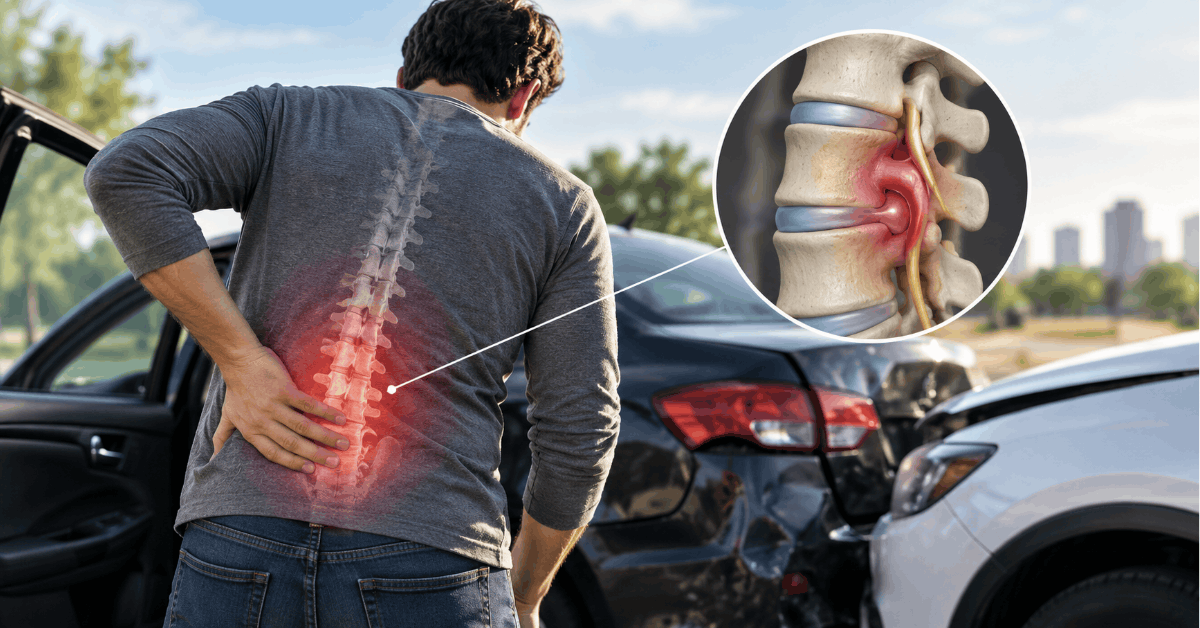
If you suffered a herniated disc in a car crash, seek medical treatment immediately. Then, contact an experienced car accident attorney from Cousin Benny Personal Injury to discuss your legal rights and options.
What Is a Herniated Disc?
Spinal discs are soft, rubbery cushions between spinal bones, which stack to comprise the spine. A herniated disc occurs when a vertebra, or bone of the spine, is damaged and part of the disc’s soft center pushes out through a tear in its outer layer. The disc may push into the spinal canal, where it could compress, put pressure on, or irritate the spinal cord.
Herniated discs are a type of spinal cord injury. The spinal cord is a bundle of nerves that carries messages to and from the brain. Because of the important role that the spinal cord plays, any damage to it can be serious.
While herniated discs can occur in any part of the spine, they are most common in the lower back. Herniated discs are also known as ruptured discs or slipped discs.
Symptoms of a Herniated Disc
The symptoms of a herniated disc vary depending on where the injury occurred. Some victims do not suffer any symptoms at all. However, the following symptoms can indicate a herniated disc, so you should be on the lookout for them after a car accident:
- Back, neck, arm, or leg pain
- Sharp localized pain in the neck or back
- Pain in the foot or shoulder
- Chronic pain in the mid or lower back, especially after sitting or standing for long periods of time
- Back pain that radiates from the lower back to the buttocks, down the back of the thigh, and into the calf and toes
- Persistent aching or stiffness along the spinal column
- Radiating numbness, tingling, or weakness in one arm or leg
- Muscle spasms in the lower back, especially after attempting to stand straight
If you notice these symptoms, seek medical attention immediately.
Diagnosing a Herniated Disc
The first step to treating a herniated disc is to receive a proper diagnosis. This starts with seeking medical attention. A doctor can conduct a physical examination and feel for any protrusions. Additionally, they can order diagnostic tests to confirm their suspicions, such as:
- X-rays
- MRIs
- CT scans
- Electromyography
- Single-photon emission computerized tomography
- Myelography
Medical Treatment for a Herniated Disc
Some patients can recover from a herniated disc with rest and conservative treatment. However, many people experience ongoing pain and complications that may require more aggressive treatment, including surgery. Depending on the patient’s individual circumstances, surgical options may include:
- Discectomy surgery: This surgery removes the herniated portion of a disc.
- Fusion surgery: This surgery fuses two or more vertebrae to stop movement that causes pain.
- Vertebroplasty: This procedure involves injecting bone cement into compressed or fractured vertebrae.
- Laminectomy/decompression: This surgery relieves nerve pressure by removing bone that has protruded into the spinal canal.
- Artificial disc implant: This surgery implants artificial discs between injured discs to promote stability and minimize pain.
Additionally, patients may receive pain management treatment, injections, and rehabilitation services to help them cope with the injury and regain mobility.
Complications of a Herniated Disc
Herniated discs can cause complications that drastically reduce the victim’s quality of life. In some cases, the herniated disc presses onto the entire bundle of nerves below the spinal canal, which can cause a medical emergency that results in lasting weakness or paralysis if not promptly addressed.
Sometimes, spinal cord injuries can cause permanent spinal cord damage, such as if the disc extrudes and presses into your spinal cord or disc material juts out of the body.
Sometimes, victims suffer worsening symptoms that make it difficult to perform activities of daily living. Others may experience numbness or loss of feeling in the inner thighs, backs of the legs, and around the rectum. Others experience loss of bladder or bowel control.
Why Do Car Accidents Cause Herniated Discs?
Herniated discs can occur in car crashes due to the tremendous force that these collisions generate. When cars collide, the occupants inside feel the combined speed and force of both vehicles. Because they are in a seated position, much of this force is absorbed by the back, where the spinal cord rests. Often, the force of the crash is sufficient enough to displace vertebrae.
Filing a Car Accident Claim in Pennsylvania
If you were injured in a car accident in Pennsylvania, your first step to recovering compensation is to report the accident to your insurance company. All auto insurance policies in the state must include first-party medical benefits of at least $5,000, which cover your immediate medical expenses, regardless of fault.
Next, you can pursue compensation from the at-fault driver. The particular damages that you can recover compensation for depend on whether you chose to have limited tort or full tort insurance. Limited tort insurance restricts your right to recover compensation for non-economic damages unless you suffered a serious injury or an exception applies. Full tort insurance allows you to seek compensation for all of your accident-related expenses without restrictions on non-economic damages.
What Financial Compensation Can You Recover After a Car Crash Causing a Herniated Disc?
Car accident victims in Pennsylvania can seek compensation for economic damages, regardless of their tort election. These damages include direct financial losses, such as:
- Medical expenses: You can seek compensation for medical bills you incurred for emergency medical treatment and transportation, diagnostic tests, hospital stays, and surgical costs. You can also recover compensation for the payment of ongoing medical care, follow-up visits, specialist visits, rehabilitation, and therapy. You can even seek compensation for future medical expenses you anticipate incurring.
- Lost income: Your car accident claim can seek compensation for the lost income you incurred while you were seeking medical care and recovering from your injuries. This includes your lost wages, salary, overtime pay, bonuses, commissions, tips, and employment benefits.
- Reduced earning capacity: If your injuries prevent you from returning to work or make you have to switch to a lower-paying job, you can seek compensation for your reduced or lost earning capacity.
- Property damage: You can also seek compensation for the costs to repair or replace your damaged vehicle and other damaged personal property.
- Out-of-pocket expenses: You may have incurred other expenses that had an economic impact, such as payment for co-pays, deductibles, attendant care, mileage to medical visits, replacement services, and alternative transportation costs.
If you are eligible to recover compensation for your non-economic damages, this could include compensation for:
- Physical pain and suffering
- Mental anguish
- Emotional distress
- Psychological trauma
- Reduced quality of life
At Cousin Benny Personal Injury, we tediously prepare personal injury cases for maximum compensation.
What Is My Car Accident with a Herniated Disc Worth?
The potential value of your personal injury claim will depend on factors specific to your case. Some people are able to recover fairly quickly while others may suffer ongoing discomfort. The potential value of your personal injury case can be affected by factors such as:
- The severity of your injury: Higher settlements are often awarded in cases resulting in more serious injuries, such as those that cause chronic pain or limited mobility.
- Where your injury occurred: Your personal injury claim’s value can be affected by whether you suffered a cervical, thoracic, or lumbar spinal injury.
- The type of medical treatment you need: The more intrusive your medical treatment, the higher your claim might be.
- The duration of your medical treatment: Lengthier medical recoveries can result in higher settlements since your life continues to be negatively impacted for a longer period of time.
- What type of tort election you have with your auto insurance: If your injury does not qualify as a serious injury under Pennsylvania law, you may not be able to recover compensation for your non-economic damages if you have limited tort insurance.
- Whether the injury results in long-term or permanent impairment: If the injury prevents you from working, you can seek compensation for your lost earning capacity.
- Clarity of liability: If the other driver was clearly at fault for the accident, the insurance company will have a greater incentive to offer a fair settlement to avoid greater liability if the case goes to court.
- Who is responsible for your injury: The party responsible for your injuries and their insurance coverage can directly affect the financial recovery you can make.
- Whether you contributed to the accident: Under Pennsylvania’s modified comparative negligence rule, your compensation can be reduced by your degree of fault or eliminated completely if your negligence exceeds the defendant’s negligence.
An experienced personal injury lawyer can carefully review your case to determine its potential value.
Documenting Your Herniated Disc After a Car Accident
Documenting your injury will be key to recovering fair compensation after sustaining a herniated disc in a car accident. This helps connect the injury to the accident.
Start documenting your injury from the very beginning, starting with any emergency medical treatment that you receive. Keep all original documentation of your injuries and medical records, including records from the emergency room and ambulance company.
Your medical records can document important information for your case, including:
- The onset of symptoms
- The causal relationship between the accident and your injuries
- Your formal diagnosis
- Prognosis notes
- Costs for your medical treatment
- Opinions about the need for future medical treatments
Continue your treatment until you have recovered as much as possible. Let your doctors know if you are experiencing any new symptoms. Avoid delays in treatment or gaps between visits to avoid arguments from the insurance company that you are not mitigating damages.
You can also augment your medical records by documenting symptoms in a pain journal. Note your daily symptoms, pain, and limitations.
What To Do After a Car Accident That Causes a Herniated Disc
Your health and long-term recovery are on the line after a motor vehicle accident that causes a herniated disc, and the moments after the crash can be particularly critical. Follow these steps to protect your health and legal rights:
Call Emergency Medical Services
Call 911 and report the accident. Do not attempt to move, as doing so could cause your injuries to worsen. Inform the 911 operator that you are injured. Wait for law enforcement to respond to the scene and for you to be taken by ambulance to the nearest hospital.
Get the Other Driver’s Information
Ask the other driver for their contact information and insurance details. If you are unable to move or have been instructed not to,
Seek Medical Attention Immediately
Time is of the essence when dealing with a spinal cord injury. Don’t delay in seeking treatment or try to tough it out. You will likely need medical intervention – and the sooner you get it, the better. Taking prompt action could prevent you from suffering a more serious and permanent injury.
Get a Referral to a Specialist
You can ask your treating doctor for a referral to a spinal specialist. These injuries are serious, and you deserve the best medical care available from someone who is particularly knowledgeable about these specific injuries.
Inform Your Insurer of the Accident
Your no-fault benefits can help cover some of your initial medical costs, and your insurance contract likely requires you to notify it of any traffic accident you are involved in.
Consult with an Experienced Lawyer
Speak with an attorney who has experience handling spinal cord injury claims. At Cousin Benny Personal Injury, we offer free consultations to prospective clients, so you can learn more about your legal rights and how we can help at no cost or obligation to you. Call us today for a free case review.
Contact Our Spinal Cord Injury Lawyers for a Free Consultation
If you know or suspect that you suffered a spinal cord injury, contact Cousin Benny Personal Injury today for a free no-obligation case evaluation.
Cousin Benny Injury Lawyers are legal professionals and not doctors. Nothing contained herein is intended to be taken as medical advice. If you believe you are experiencing any of the symptoms described herein you should seek the advice of a medical professional.